T
The Montessori Method
The Montessori Method refers to an education model created by Dr. Maria Montessori in the early 1900’s. The aim of Montessori education is to give children the opportunity and tools to develop independence, responsibility, and community within their environment.
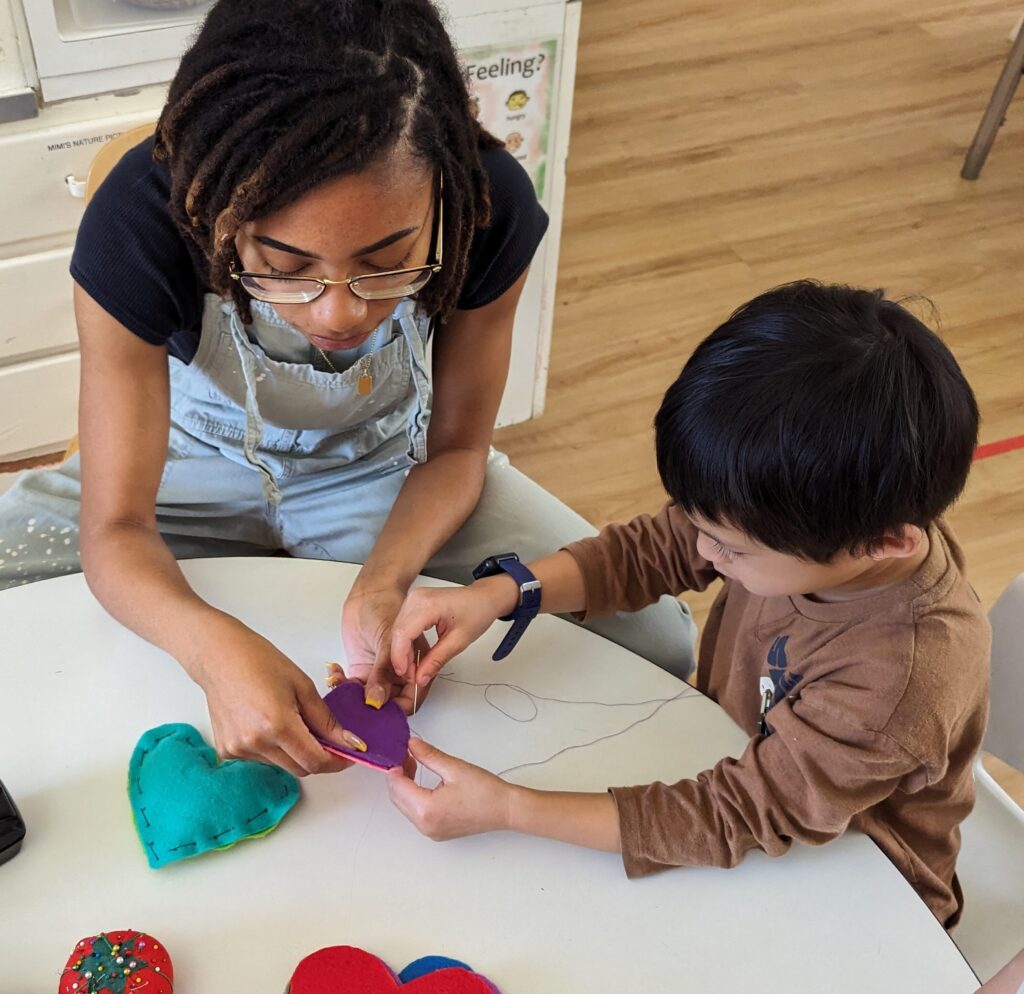
The Montessori environment is unique in the way that it allows every child to learn and develop at their own pace. The classroom is prepared and set up with a multitude of Practical Life, Sensorial, Language, Math and Cultural activities to explore. Maria Montessori referred to this prepared environment as a “children’s house”. In a children’s house, children are free to work with any material that is age appropriate for them. The children’s house is also designed to be a “home away from home” for the children while they’re at school.
The “work cycle” refers to the 3 hour period in the morning (or afternoon) where children engage with the various materials in the classroom. During the work cycle, children will choose a material, carry it to a table or work rug, do the work (usually individually), and put it away when they are done. The child repeats this cycle, choosing different works, over the 3 hour period. It’s often called the “uninterrupted work cycle” to relay the importance of a child’s focus and concentration during their work.
Montessori Kindergarten
The Montessori early childhood program is intended to be a 3 year program beginning around age 2.5-3 years old and goes up through the child’s kindergarten year (around 6 years old). During the first two years of the early childhood program, children learn the foundations of grace and courtesy skills, and are introduced to the various Montessori curriculum materials.
The child’s third year (kindergarten) in the Montessori classroom is especially important. Third year students serve as leaders in the classroom, while having the opportunity to expand on their existing knowledge of math, language, and culture topics; developing a deeper understanding of the world around them. For many children this looks like reading short books, learning how to add and subtract large quantities, doing multiplication, or researching and writing about different culture topics.
